
Over the past few years, Artificial Intelligence (AI) has revolutionized the scientific world. Through its fast search and result response, along with its accessibility to the general public, the use of AI helps various sections of society, including the scientific world, where drug discovery and drug development are among them.

With its improved efficiency, accuracy, and speed, the use of AI in diverse sectors of the pharmaceutical industry, including drug discovery and development, drug repurposing, improving pharmaceutical productivity, and clinical trials, among others such use reduces the human workload as well as achieving targets in a short period.
However, with the growing use of AI, there have also been concerns regarding the ethics of its usage, the ability to provide quality data over quantity, and the recognition of the limitations of AI-based approaches.
What is Artificial Intelligence (AI)?
Cambridge dictionary defines Artificial Intelligence as “The use or study of computer systems or machines that have some of the qualities that the human brain has, such as the ability to interpret and produce language in a way that seems human, recognize or create images, solve problems, and learn from data supplied to them”.
Since AI mimics human intelligence, it is being extensively used in the pharmaceutical industry to aid scientists. With the advent of bioinformatics and its leaps in research, which helped in the discovery of potential drugs and drug targets through computational methods, the strides brought about in the pharmaceutical industry were immense. With everything being digitalised and the patient information being recorded at every instance, the amount of data that was being generated was huge, and thus there came a requirement for the use of AI to handle the data collected.
Drug discovery, the process of identifying and developing new medications, is a complex and time-consuming endeavor that relies on labor-intensive techniques, such as trial-and-error experimentation and high-throughput screening, which results in the process of discovery taking about 15 years, with a large amount of capital ranging between $1 to and $2 billion for each approved drug.
Despite its discovery, it’s not always necessary for the drug to get approved. However, this still doesn’t ensure the drugs can make it to phase I of clinical trials. Additionally, the requirement of humans for phase IV trials to check for its efficacy and efficiency, which may affect people negatively, is also a growing concern in the discovery process. Large-scale computational screening and docking are now being used to combat these issues, which enhances the success rate of lead compounds in trials.

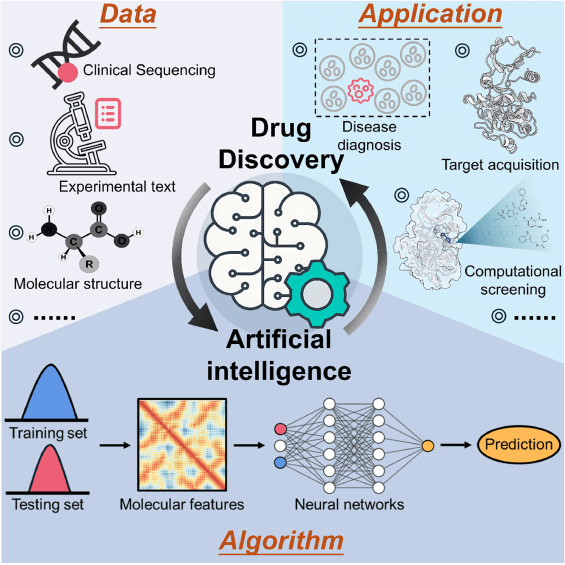
However, these methods have limitations such as inefficiency and inaccuracy. Thus, the integration of Machine learning (ML) and Deep Learning (DL) (which are subsets of AI) into the discovery process is being widely studied, by training the algorithm on how to efficiently use the data present in the databases to find potential drug candidates and to accurately spot the drug target, which in turn improves the docking process.
Working of Artificial Intelligence (AI)
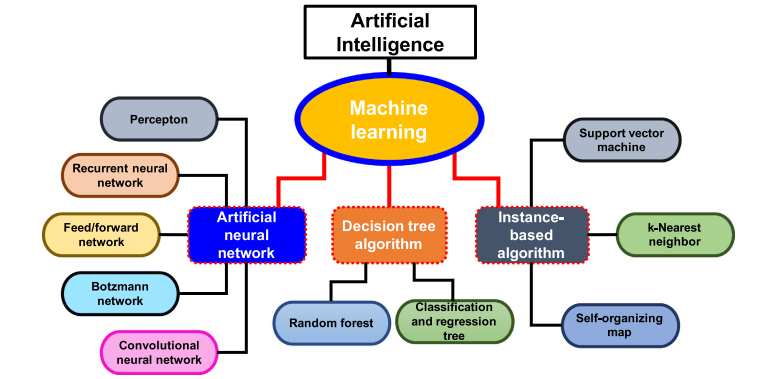
AI involves several method domains, such as reasoning, knowledge representation, solution search, and, among them, a fundamental paradigm of machine learning (ML). ML can recognize the patterns present within a set of data. Deep learning (DL), a subset of ML, utilises Artificial Neural Networks (ANN), a set of nodes with the ability to convert the input to an acceptable output by using an algorithm to solve the problems. ANNs are of various types:
- Multilayer perceptron (MLP) networks: Utilised for pattern recognition, process identification, and controls.
- Recurrent neural networks (RNNs): They are closed-loop networks with the ability to memorize and store information.
- Convolutional neural networks (CNNs): Used for image and video processing, biological system modeling, processing complex brain functions, pattern recognition, and sophisticated signal processing with he help of a series of dynamic systems of local connections.
What is Drug Discovery?
Drug discovery can be described as the process of identifying chemical entities that have the potential to become therapeutic agents. There is a growing need for the discovery of drugs, as there are still a large number of diseases that have yet to have any therapeutic agent for their treatment.
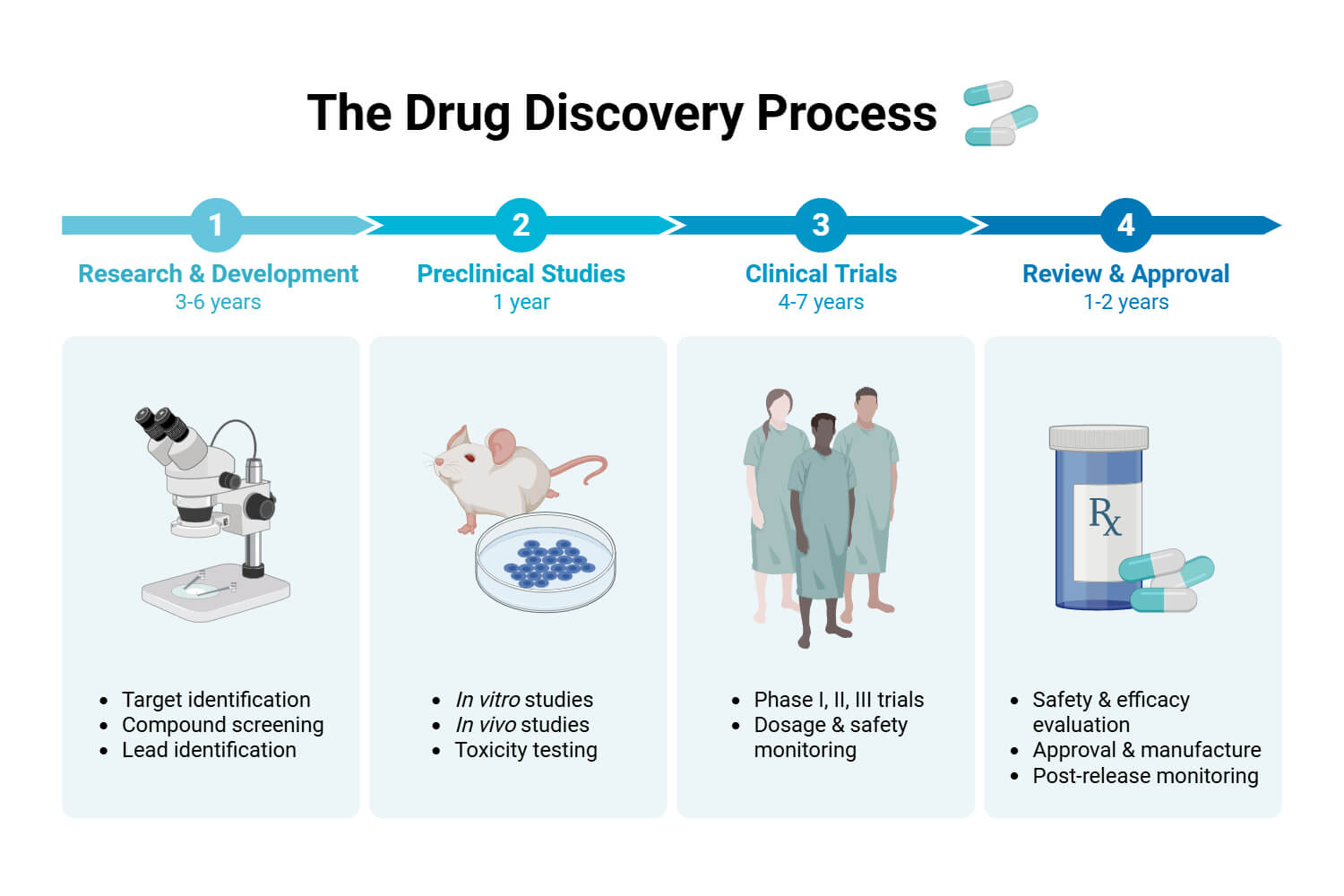
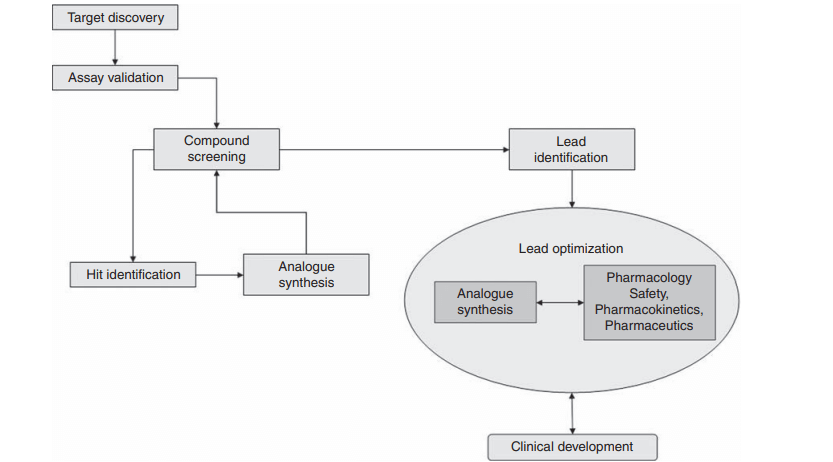
The discovery of drugs can be concisely put into four steps:
- Definition of drug targets
- Generating diversity
- Definition of lead structures
- Qualifying leads for transition to early trials
The definition of drug targets may be defined as recognizing the potential drug candidates from natural sources through methods such as bioassays, enzymatic assays, etc, or by recognizing the drug target and developing the drug through computational means or by screening compounds until identifying candidates that act against the target’s function.
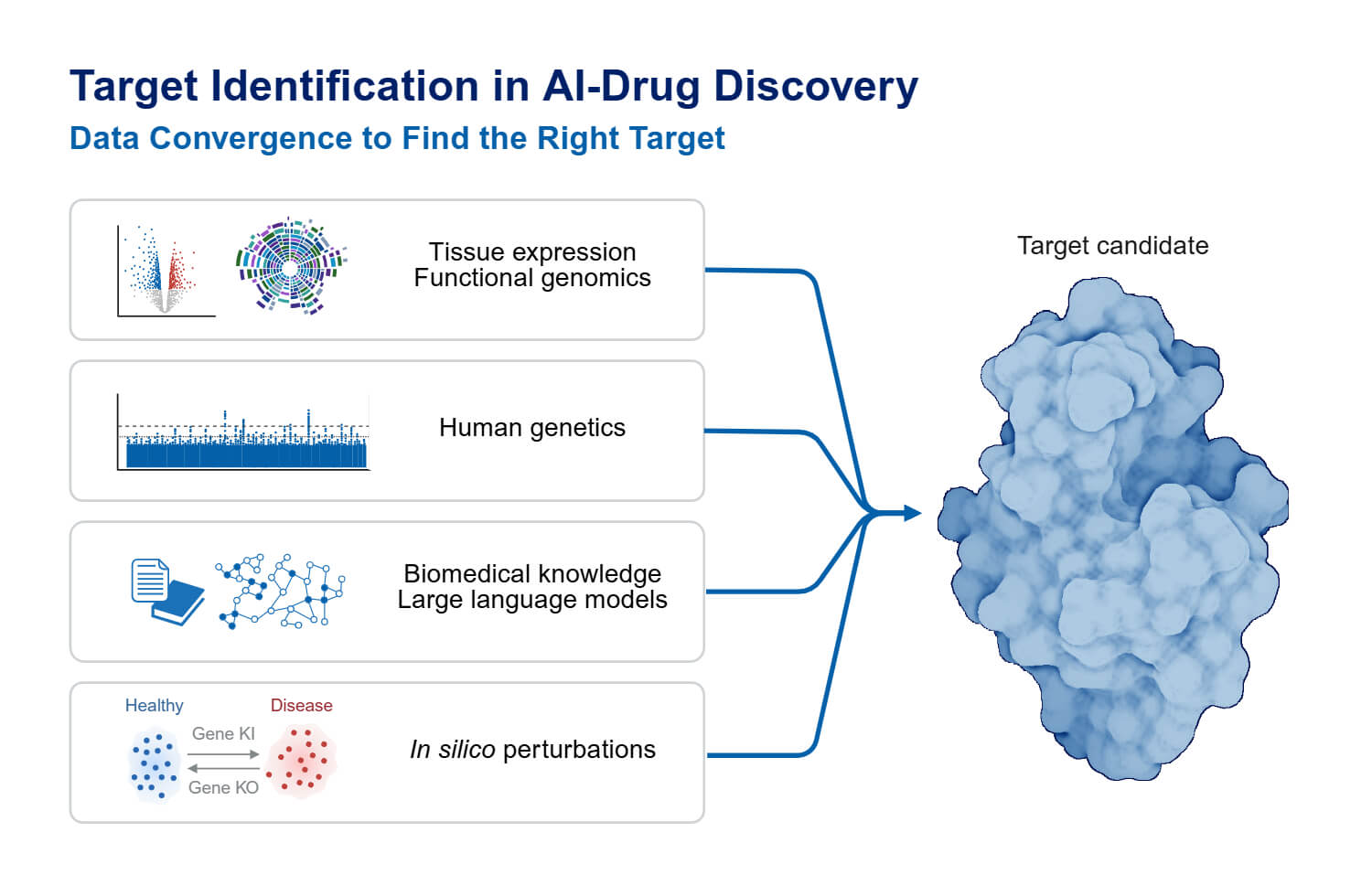
Upon finding the required drug candidates, it is necessary to find various sources for the drug to ensure that the drug clears the screening process. To generate diversity within the drug compounds, the sources from which they can be derived include natural products from diverse plant and marine life, or from chemical compound libraries, which include specific and randomly generated libraries.
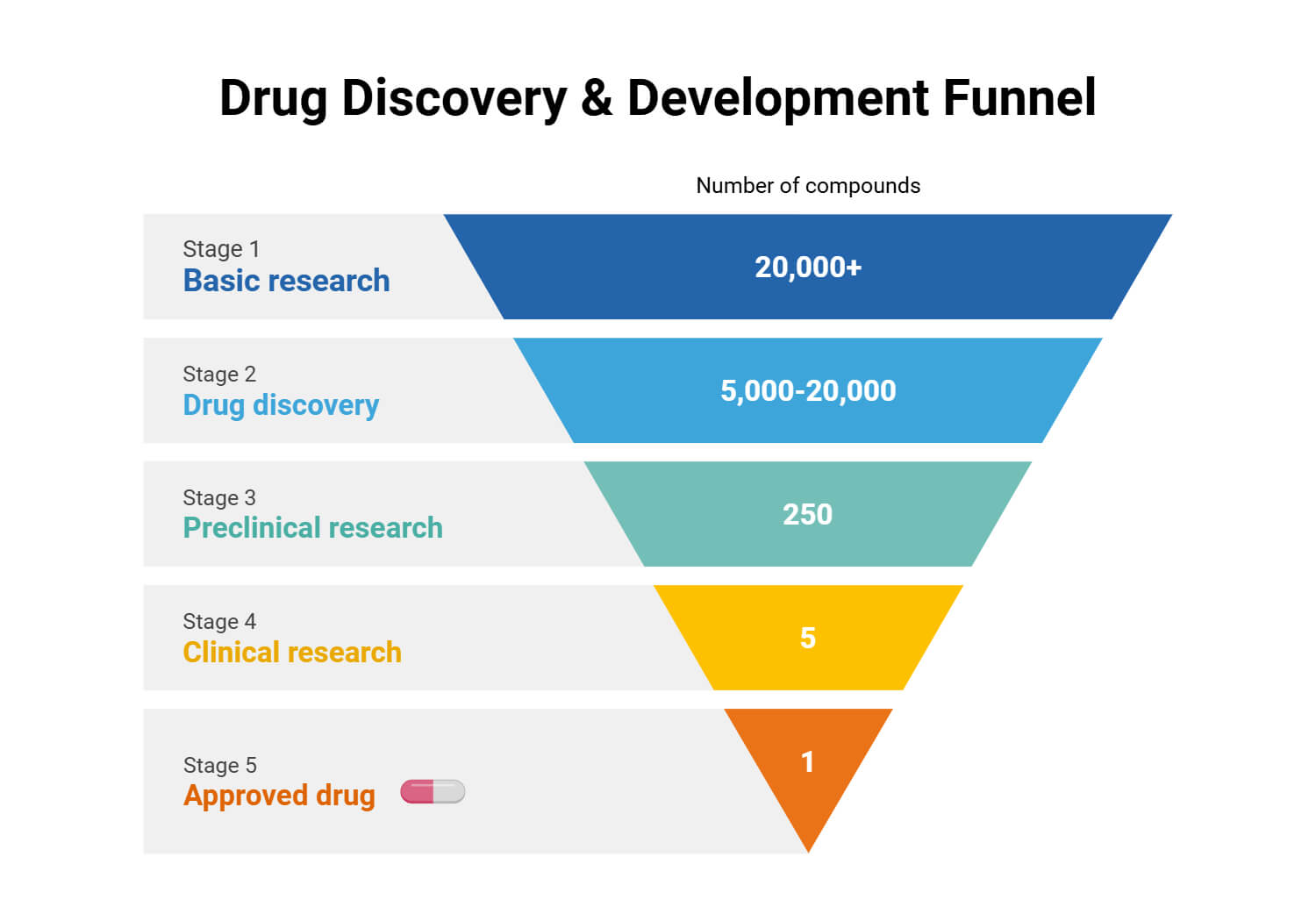
The next step is defining the drug candidates or the lead structures, done by cell-based screening or by structure-based screening. Upon determining the lead structure, it is crucial to gather information on its dose, route, and schedule of administration in appropriate in vivo efficacy models.
The drug is then taken for clinical testing to ensure that it follows the guidelines set by the regulatory body before its release.
Integration of AI in Drug Discovery
As mentioned in the above sections, the major limitation of the traditional drug discovery process is its reliance on a trial-and-error method. Such a method is not efficient in the long run, due to the high cost in each step, along with the large amount of data available. By integrating the Machine Learning algorithm, the costs and time can be cut by half while the efficiency and accuracy of the data increase.
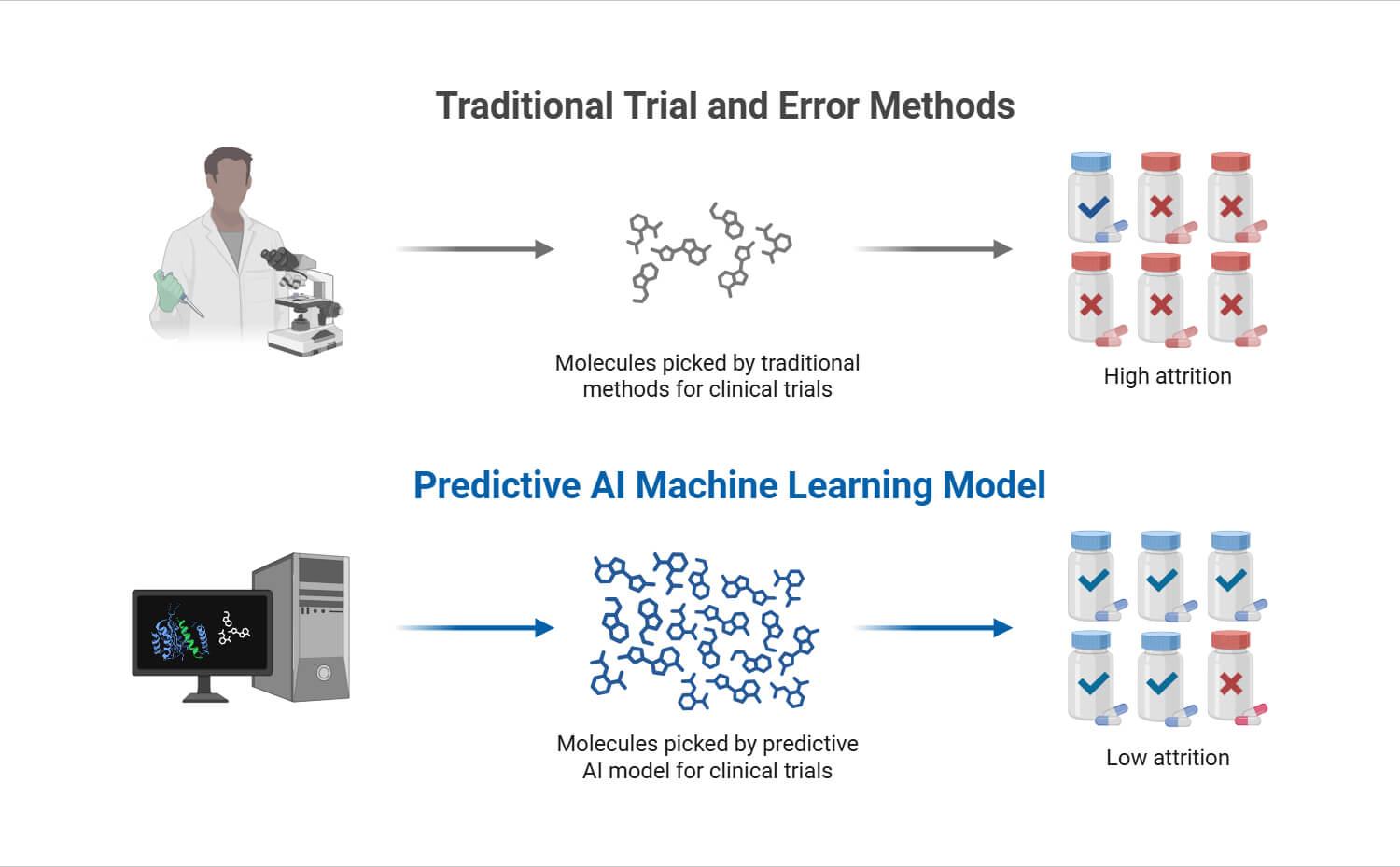
For example, the accuracy and toxicity of the lead compounds can be described properly with the use of ML. This, in turn, increases the chance of the drug clearing the clinical testing and getting approved. Such an approach may be useful in developing more novel drugs in the future.
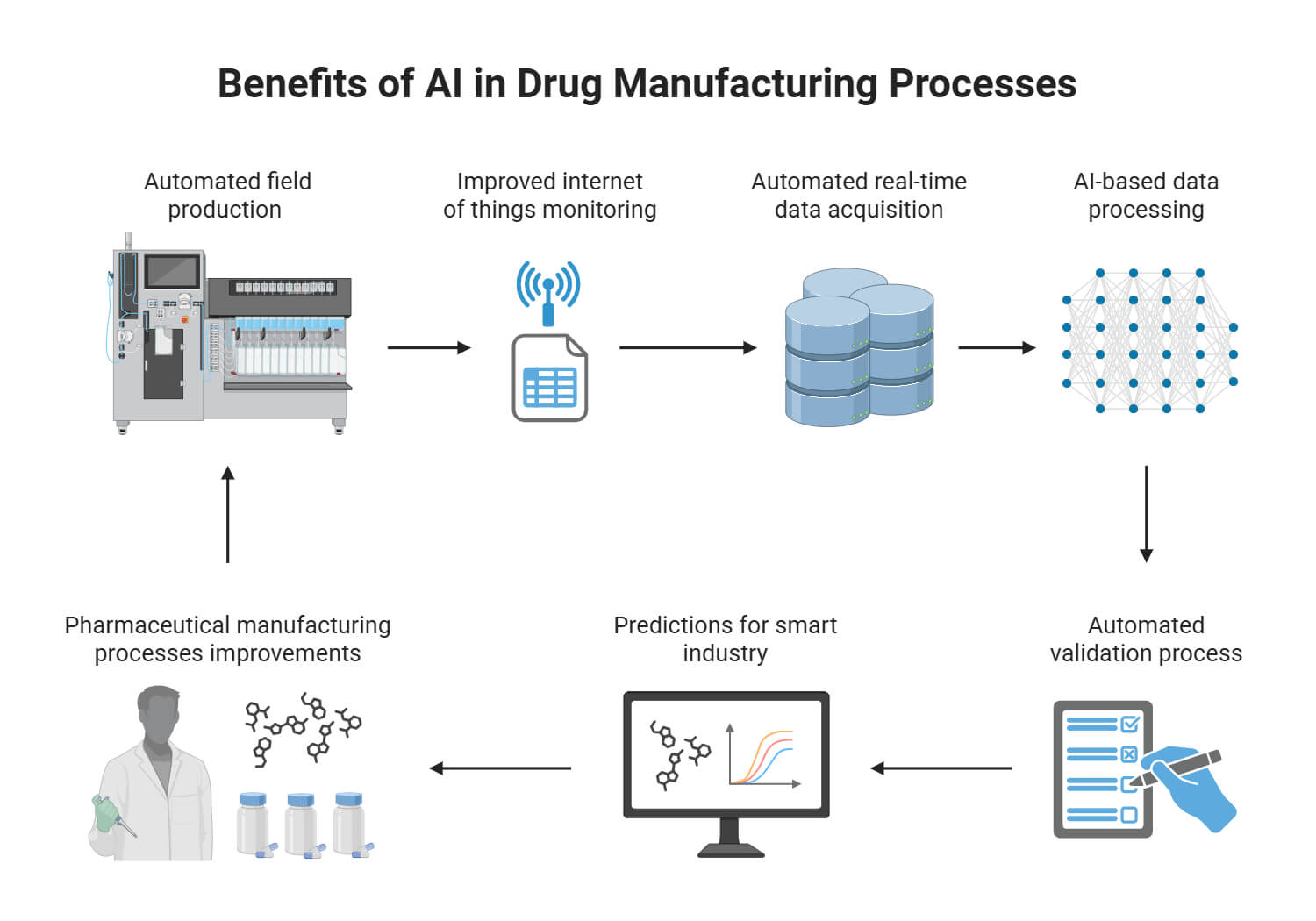
The various methods through which AI can enhance the drug discovery process are mentioned below:
- Accuracy: With the use of ANN to mimic the human neuron network, the data set that is being produced by AI is quite accurate. It helps in finding patterns that may be overlooked by scientists. These patterns turn out to be the best approach for identifying the potential target. It helps in accurately predicting the drug targets by optimizing the proper toxicity, physicochemical properties, bioactivity, etc of the lead structure. This can overall improve the quality and efficacy of the drug being developed.
- Novel drugs: With the predictions by the AI model being more accurate and efficient, there has been a rise in the development of novel drugs. Unlike traditional drug discovery methods that are often dependent on analysing the existing data and modifying it, AI-based approaches allow for designing novel drugs with desirable and efficient qualities. For example, AlphaFold, which is an AI-based protein structure computational software designed by DeepMind, helped in making great strides in computational biology. With the software being able to predict the three-dimensional structure from protein sequences, it helped in unlocking potential drug targets, thereby aiding in the discovery of novel drugs. AI helped in predicting a better target protein structure for a particular drug and learning its drug-protein interaction.
- Time efficient: The ability of AI to be able to go through large databases within a span of a second to generate results helps cut the time required by scientists to be able to generate diversity with lead structures. This immensely aids in faster data search and thereby reduces the years it takes for drug discovery and development. The accuracy of the drug significantly increases the chances of it getting clearance in the trials, which reduces the time required to work on the drug once more.
- Cutting costs: One of the major factors that sets back drug discovery is the immense cost at each step of the drug discovery process. With the reduction in trial and error methods and thereby less chance of a drug failing at the clinical testing phase, the costs required for reworking the drug are reduced. Also, using AI to find efficient methods for better product development and manufacturing at lower costs is another benefit.
- Accidents: When it comes to treating a disease, a combination of drugs might be required. However, due to different active pharmaceutical ingredients (API) present in different drugs, wrong combinations might lead to adverse pharmacological effects. Chances of such adverse effects occurring can be greatly reduced by implementing AI to find out better drug interactions and suitable combinations, also aiding in the personalised medicine sector.
Challenges and Limitations of Artificial Intelligence (AI)
Despite its many benefits, AI is still met with disagreements amongst the scientific community. It serves to reduce the workload and make it more accurate; however, how much of the data produced can be blindly taken into consideration without human intervention? Even though AI is being widely incorporated into every sector of drug discovery and development, it has numerous drawbacks and limitations.
Some of them are as follows:
- Availability of Data: The usefulness of AI comes from its ability to go through a large amount of data within minutes. However, it is not always necessary that the data that is available is reliable. There are several instances where the results are usually noy reproducible. AI is not able to distinguish between true data, which is a major setback. There are also chances where AI software might predict its results to align with the prompts provided by the scientists. Furthermore, to train the algorithm, large amounts of data are required, which may not be present or may not be reliable.
- Environmental impact: One of the major limitation of AI is the environmental impact it causes. AI works with the help of large clusters of graphics processing units (GPUs), which requires large energy consumption usually generated with the help of water. Additionally, such consumption generates a high amount of heat. To cool down the servers, fresh water is required, causing depletion of water resources, leading to irreversible environmental impact. For example, a minimum of 10 -50 query searches on the GPT-3 interference consumes about 500 millilitres of water.
- Ethical considerations: Finally, there is a large discourse about the ethical impact of AI. As mentioned earlier, for AI to be able to provide reliable predictions, it needs to be trained with large amounts of data which comes from personal information of the public. This causes a clash with the moral usage of AI as it is an exploitation of the general public, who are not aware that their data is being utilised. Another potential concern is the loss of jobs in the automation of the drug discovery process. With the incorporation of AI, humans with years of expertise would be replaced, which is not right from an ethical point of view.
Thus, it is necessary to keep these points in mind before the integration of Artificial Intelligence in the Pharmaceutical industry.
Conclusion
The use of AI in drug discovery and development can help make great advances within a short amount of time. By helping in exploring and unlocking a great potential to discover drug candidates for diseases that are yet to be studied, it can help in providing personalised medicines and therapeutics.
However, the concern that encompasses the use of AI is to know whether a machine is able to replace years of human expertise and knowledge, and how much of that replacement is ethical. The health of millions cannot be in the hands of unreliable predictions and made-up data; it needs to be well researched, and a lot of thought should be put into it.
So, to conclude this article, the integration of AI for the advancement of medicine should not come at the expense of human lives and the environment.
References
- Huang, S. M., Lertora, J. J., & Atkinson Jr, A. J. (Eds.). (2012). Principles of clinical pharmacology. Academic Press..
- Salazar, D. E., & Gormley, G. (2017). Modern drug discovery and development. In Clinical and translational science (pp. 719-743). Academic Press.
- Mak, K. K., Wong, Y. H., & Pichika, M. R. (2024). Artificial intelligence in drug discovery and development. Drug discovery and evaluation: safety and pharmacokinetic assays, 1461-1498.
- Blanco-Gonzalez, A., Cabezon, A., Seco-Gonzalez, A., Conde-Torres, D., Antelo-Riveiro, P., Pineiro, A., & Garcia-Fandino, R. (2023). The role of AI in drug discovery: challenges, opportunities, and strategies. Pharmaceuticals, 16(6), 891.
- Rehman, A. U., Li, M., Wu, B., Ali, Y., Rasheed, S., Shaheen, S., … & Zhang, J. (2025). Role of artificial intelligence in revolutionizing drug discovery. Fundamental Research, 5(3), 1273-1287.
- Ren, S. (2023). How much water does AI consume? The public deserves to know it.
