
Non-cyclic photophosphorylation is a light-dependent process that synthesizes ATP and NADPH in photosynthesis through a unidirectional flow of electrons. In this process, electrons are released from water molecules and transferred through a series of carriers of Photosystem II and Photosystem I.
The electrons transferred during this process do not return to the original chlorophyll molecule; instead, it is accepted by NADP+ to form NADPH. Meanwhile, ATP is generated via the chemiosmotic mechanism. During this process, oxygen gas is also released, which is essential for all life forms.
Location of Non-Cyclic Photophosphorylation
This process occurs in the thylakoid membranes of the chloroplast, particularly on the grana lamellae. PS II is mainly found in the stacked grana regions, while PS I is present in the unstacked regions or lamellae.
PS II to PS I electron flow (Z-scheme)
The Z-scheme is the graphical representation of energy changes of electrons as they move through PS II to PS I during non-cyclic photophosphorylation. This includes-
Excitation of PS II (P680)
Photons excite the electrons at the reaction centre, i.e., P680 in PS II. This causes the loss of electrons, which are later replaced by electrons received by the photolysis of water.
Transport of electrons via Plastoquinone PQ
The excited electrons are accepted by the primary electron acceptor and passed to PQ, which helps in the transport of protons along the thylakoid membrane.
Transport of electrons via the Cytochrome b6f complex
PQ transfers electrons to the cytochrome b6f complex, which acts as a protein pump, creating H+ in the thylakoid lumen and helping in the formation of the proton gradient.
Transfer through Plastocyanin (PC)
Electrons are then transferred to Plastocyanin, which transfers them to PS I (P700)
Excitation of PS I
Light energy strikes PS I, then electrons are excited to a higher energy level and transferred to ferrodoxin (Fd),
Reduction of NADP+
The electrons are then transferred from ferrodoxin-NADP+ reductase, which reduces NADP+ to NADPH.
Photolysis of Water and Oxygen Evolution at Photosystem II (PS II)
Light energy received by the chlorophyll molecules (P680) is utilized in Photosystem II (PS II) to separate the water molecules into protons (H+ ), electrons (e–), and oxygen (O2). This is referred to as photolysis of water.
Oxygen Evolving Complex (OEC) or water-splitting complex catalyzes it and binds to the inner side of the thylakoid membrane and is composed of manganese (Mn), calcium (Ca2+), and chloride (Cl–).
Reaction:
2H₂O → 4H⁺ + 4e⁻ + O₂↑
Steps involved:
Light absorption: Light (P680) interacts with electrons in PS II to elevate their energy levels.
Electron replacement: The lost electrons of P680 are substituted by the electrons from water photolysis.
Oxygen evolution: the oxygen, which is formed as a by-product, is diffused out of the chloroplast, and it is added to the oxygen in the atmosphere.
Proton release: The emitted H+ + ions are retained within the thylakoid lumen and help in generating the proton gradient necessary to form ATP.
Significance:
It provides electrons to the electron transport chain.
It produces oxygen, without which life could not exist.
It donates to the proton pool of the thylakoid lumen.
Proton Gradient and Action of ATP Synthase
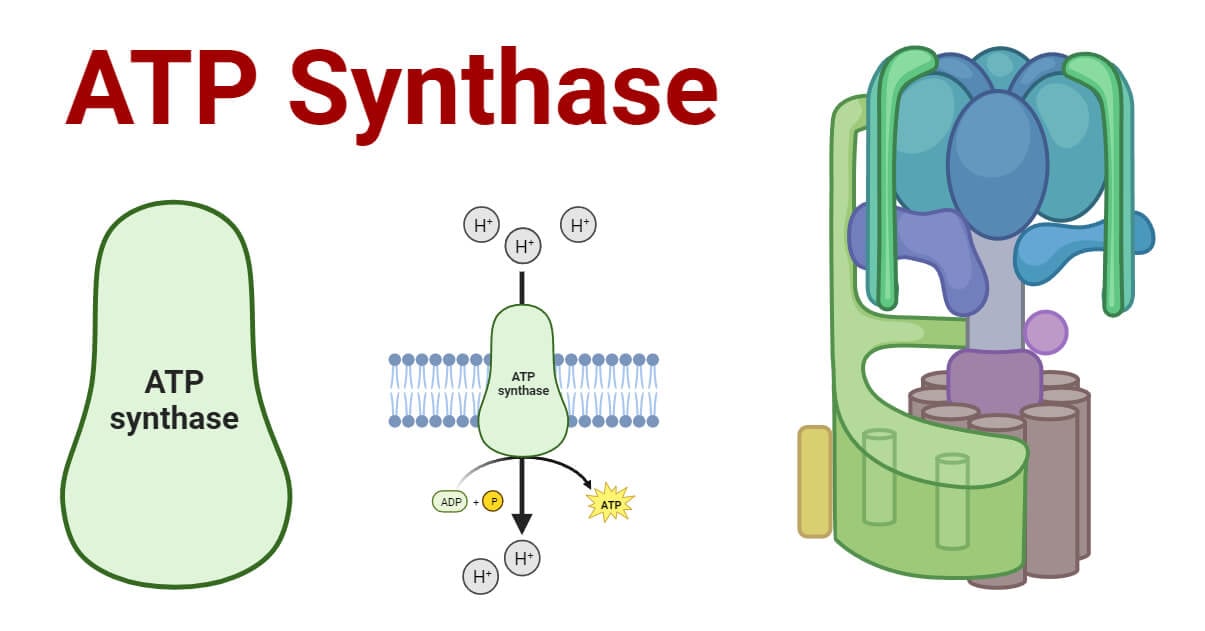
As the electrons move between PS II and PS I via the electron transport chain (ETC), protons (H+ +) are actively moved across the thylakoid membrane.
Mechanism: During the transfer of the electrons through the cytochrome b6f complex, the protons were pumped out of the stroma into the thylakoid lumen. More protons are synthesized within the lumen when water is photolysed at PS II, which leads to an electrochemical gradient of protons with a high concentration of H+ + in the lumen and a low concentration in the stroma. This gradient constitutes a proton motive force (PMF), which powers the ATP production by the ATP synthase complex (CF0 -CF1 complex) of the thylakoid membrane. In summary, this process establishes a steep H+ gradient across the membrane, driving ATP synthesis.
Process: Through the ATP synthase, protons diffuse down their concentration gradient from the lumen to the stroma. The generated energy is used to combine the ADP + Pi to ATP. This is called photophosphorylation, and in non-cyclic photophosphorylation, this process yields ATP that is used subsequently in the Calvin cycle.
Reduction of NADP+ to NADPH by means of Ferredoxin-NADP –Reductase
In Photosystem I (PS I), light is absorbed by the reaction center chlorophyll molecule, P700, which becomes photoexcited. Excited electrons move through a series of acceptors and then to ferredoxin (Fd), a small, iron-sulfur protein on the stromal side of the thylakoid membrane. Ferredoxin-NADP+ reductase (FNR) withdraws electrons from reduced ferredoxin, transferring them to NADP+ (nicotinamide adenine dinucleotide phosphate) and reducing it to NADPH.
Reaction:
NADP⁺ + 2e⁻ + H⁺ → NADPH
Importance of NADPH
NADPH provides the reducing power needed in the Calvin cycle, where carbon dioxide (CO2) is sequestered into carbohydrates. It also acts as an electron donor in other chloroplast biosynthetic processes.
Protein Complexes
Non-cyclic photophosphorylation process entails a series of protein complexes that constitute the chain of transportation of electrons between Photosystem II and Photosystem I. These complexes facilitate electron and proton conduction, connecting light harvesting with the formation of ATP and NADPH.
Plastoquinone (PQ)
Plays a role as a mobile electron carrier between Photosystem II (PS II) and the complex of cytochrome b6f. It takes electrons provided by the reduced primary acceptor of PS II and protons (H+ +) provided by the stroma, which results in the formation of plastoquinol (PQH2 ). PQH2 diffuses across the thylakoid membrane and transfers electrons to cytochrome b6 and gets out protons into the lumen- providing the proton gradient.
Cytochrome b₆f Complex
Plays a major role in connecting PS II and PS I. Transfers electrons in PQH2 to plastocyanin (PC). At the same time, it moves protons (H+) across the thylakoid membrane, producing the proton motive force required to make ATP. It has a number of cytochromes and iron-sulfur proteins that aid in electron transfer.
Plastocyanin (PC)
A protein (a very small one that contains copper) that is found in the lumen of the thylakoid. Takes in electrons released by cytochrome b6f and passes them on to the oxidized reaction center of Photosystem I (P700+).
Ferredoxin (Fd)
An iron-sulfur protein of small size that is present on the stroma side of the thylakoid membrane. Bonds with the electrons of the terminal acceptor of Photosystem I. Donates these electrons to the enzyme ferredoxin-NADP + reductase (FNR), which reduces NADP + to NADPH. All these elements ensure a unidirectional flow of electrons, that is, water (electron donor) to NADP+ + (final electron acceptor).
ATP
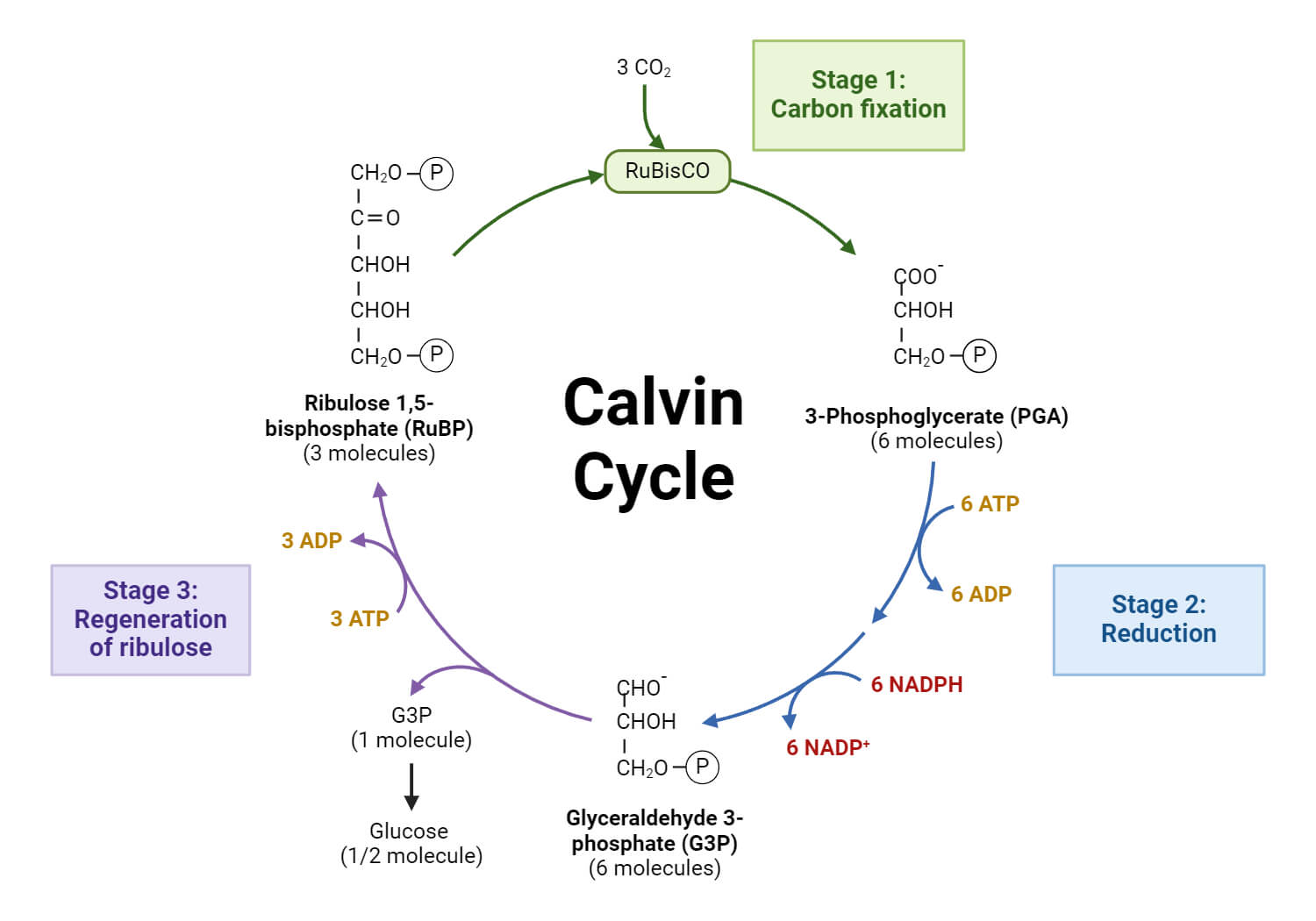
Non-cyclic photophosphorylation generates ATP and NADPH, which are the primary energy and reducing power of the Calvin Cycle (light-independent reactions).
Energy yield
Two electrons are moved to the water, giving one electron to NADP +: 1 molecule of NADPH is formed. About 1 molecule of ATP is produced (based on the efficiency of proton translocation). One of the by-products is oxygen (1/2 O 2 ).
Total products in each oxygen molecule evolved:→ 2 NADPH + 2 ATP + O₂
Nonetheless, a greater proportion of ATP: NADPH (about 3:2) is required to facilitate the carbon fixation process by the Calvin Cycle. In order to fulfill this demand, plants occasionally transition to cyclic photophosphorylation, which generates more ATP without generating NADPH.
Regulatory Alternation of Cyclic and Non-Cyclic Flow
The plants are able to modify the electron movement between non-cyclic and cyclic photophosphorylation depending on the needs of metabolism and environmental conditions.
Regulatory factors:
ATP/NADPH Demand: With an excess Calvin cycle using so much ATP in comparison to NADPH, the plant induces cyclic photophosphorylation (about PSI) to produce further ATP rather than NADPH.
Redox State of Ferredoxin: In the event of large amounts of NADP +, the electrons are transported to NADPH through FNR (non-cyclic). Where NADP + is limited, or the Calvin cycle is slackened, there will be a redistribution of electrons back to the cytochrome b6 complex (cyclic).
Intensity and Wavelength of light: Non-cyclic flow is preferred by high light intensity. The unfavorable or unbalanced light condition can cause the partial cyclic flow to shield the photosystems against photoinhibition.
Protein Modifications: Chlorophyll a. The reversible phosphorylation of some thylakoid proteins assists in changing PSII- and PSI-dominant activities. This is a dynamic control that keeps the chloroplasts at an optimal production of ATP and NADPH so that optimal photosynthesis is guaranteed.
Cyclic Factors: Environmental Influence of Non-Cyclic Activity
The efficiency of non-cyclic photophosphorylation is conditional on several external environmental factors:
Light Intensity: The moderate to high light intensities promote the process of electron excitation and ATP/NADPH generation. Very intense light may have the effect of photoinhibiting PSII.
Wavelength (Quality of Light): The best wavelengths in chlorophyll absorption and non-cyclic activity are blue and red.
Temperature: The photosystems can work under an optimum range (20-30 ° C). Thylakoid membranes can be destroyed by extreme cold or heat.
Water Availability: In non-cyclic flow, water serves as the source of electrons. Water stress or drought decreases the extent of photolysis and also constrains the evolution of oxygen.
Nutrient and CO₂ Levels: The lack of such nutrients as Mg 2+, Fe, or Mn influences electron-transporting proteins. NADPH use can be blocked by low CO2, which modulates the flow balance.
Comparison to Cyclic Photophosphorylation
Photosynthesis is a process in plants that undergoes two kinds of photophosphorylation that are different in terms of pathway, output, and functions.
In non-cyclic photophosphorylation, Photosystem II (PSII) and Photosystem I (PSI) are involved in a linear chain of electrons, and initiation involves the process of photolysis of water. The movement of electrons in water by PSII to plastoquinone (PQ) to cytochrome b6 complex to plastocyanin (PC) to PSI to ferredoxin (Fd) to NADP+ + results in ATP, NADPH, and oxygen as products. The electrons lost by PSI are replaced by PSII, and the electrons lost by PSII are replaced by water electrons; hence, the process is unidirectional.
On the contrary, Photosystem I (PSI) takes part in cyclic photophosphorylation. In this case, the excited electrons of PSI are passed onto ferredoxin, but they do not reduce NADP 3+ but rather recycle back to cytochrome b6-complex and then to PSI via plastocyanin. In this loop, the generation of ATP only and not NADPH and oxygen occurs, because no water is divided.
Non-cyclic photophosphorylation is functionally involved in supplying both energy (ATP) and reducing power (NADPH) to the Calvin cycle, and cyclic photophosphorylation modulates the ATP: NADPH ratio when additional ATP is needed. Both of these processes usually take place concurrently in the chloroplast, so that there is maintenance of balance in energy flow and the optimum photosynthetic effectiveness under diverse conditions of light and metabolic activity.
Experimental Results: The idea of non-cyclic photophosphorylation and the existence of two different photosystems have been established with the help of several experiments, which are fundamental to the study of photosynthesis.
Fluorescence Studies: Studies on chlorophyll fluorescence gave initial evidence of the existence of two photosystems. Light that gets absorbed by chlorophyll is partly released as fluorescence. The relationship between the emission of the fluorescence and the light intensity and wavelength is not the same. These differences showed that there were two different absorption peaks that were associated with PSII (P680) and PSI (P700), which substantiated independent and interrelated functions in electron transport.
Experiments of Oxygen Flash Yield (Experiment of Kok)
Experiments on the oxygen evolution per flash of light in chloroplasts were carried out by Bessel Kok (1957). He could find out that a single molecule of oxygen is generated in every four flashes, which implied that four photo-oxidation events are needed to fully split two molecules of water (the Kok cycle). This proved that the main electron donor in photosynthesis is water and that oxygen evolution takes place in a specific site, which is Photosystem II.
P700 Redox Measurements: Spectroscopy of the oxidation and reduction of P700, the PSI reaction center, during the light and dark phases, was observed. Upon excitation of light to P700, it loses an electron and gets oxidized (P700 –). When an electron is removed from plastocyanin, it goes back to its reduced form. These redox transitions were a direct indication of electron transfer between PSI and PSII, which proved the Z-scheme of non-cyclic electron flow.
These experiments jointly define the contemporary concept of light reactions – in which two photosystems act sequentially, transforming the energy in light to generate ATP and NADPH and produce oxygen.
Conclusion
The fundamental process of photosynthesis in plants, algae, and cyanobacteria to transform solar energy into chemical energy is non-cyclic photophosphorylation. It entails a linear flow of electrons running between water and NADP+ + with the help of a sequence of pigment-protein complexes and electron carriers inside the thylakoid membrane. This process also generates ATP, NADPH, and O 2, all of which are needed to maintain the biosphere.
ATP provides the energy required in the energy-demanding reaction of the Calvin cycle, and the reducing power required in carbon fixation is supplied by NADPH. The released oxygen replenishes the atmosphere and sustains aerobic life. Therefore, non-cyclic photophosphorylation, in addition to sustaining the metabolism of the plant, has a primary role to play in the ecological balance and in sustaining all organisms that require oxygen on the earth.
References
- Describe the pathway of electron transport during photosynthesis, highlighting the flow from water to NADP+ ? (2025, August 12). Sathee Forum. https://forum.prutor.ai/index.php?threads/describe-the-pathway-of-electron-transport-during-photosynthesis-highlighting-the-flow-from-water-to-nadp%E2%81%BA.16613/
- Emrich-Mills, T. Z., Proctor, M. S., Degen, G. E., Jackson, P. J., Richardson, K. H., Hawkings, F. R., Buchert, F., Hitchcock, A., Hunter, C. N., Mackinder, L. C. M., Hippler, M., & Johnson, M. P. (2025). Tethering ferredoxin-NADP+ reductase to photosystem I promotes photosynthetic cyclic electron transfer. The Plant Cell, 37(3). https://doi.org/10.1093/plcell/koaf042
- Fisher, N., Bricker, T. M., & Kramer, D. M. (2019). Regulation of photosynthetic cyclic electron flow pathways by adenylate status in higher plant chloroplasts. Biochimica Et Biophysica Acta (BBA) – Bioenergetics, 1860(11), 148081. https://doi.org/10.1016/j.bbabio.2019.148081
- Haneef, J. (2017, November 24). Difference between cyclic and non cyclic photophosphorylation. Major Differences. https://www.majordifferences.com/2013/02/difference-between-cyclic-and-non.html
- Libretexts. (2020, July 27). 7.6: Photosynthesis and the importance of light. Biology LibreTexts. https://bio.libretexts.org/Courses/Portland_Community_College/Cascade_Microbiology/07%3A_Microbial_Metabolism/7.6%3A_Photosynthesis_and_the_Importance_of_Light
- Raven, J. A. (1971). Cyclic and Non-cyclic Photophosphorylation as Energy Sources for Active K Influx in Hydrodictyon africanum. Journal of Experimental Botany, 22(71), 420–433. https://www.jstor.org/stable/23687051
- Schreiber, U. (2017). Redox changes of ferredoxin, P700, and plastocyanin measured simultaneously in intact leaves. Photosynthesis Research, 134(3), 343–360. https://doi.org/10.1007/s11120-017-0394-7
- Siegbahn, P. E. (2012). Water oxidation mechanism in photosystem II, including oxidations, proton release pathways, O―O bond formation and O2 release. Biochimica Et Biophysica Acta (BBA) – Bioenergetics, 1827(8–9), 1003–1019. https://doi.org/10.1016/j.bbabio.2012.10.006
- Taiz, L., Zeiger, E., Møller, I. M., & Murphy, A. (2018). Plant Physiology and Development (6th ed.). Sinauer Associates.
- The Z-Scheme Diagram of photosynthesis. (n.d.). https://www.life.illinois.edu/govindjee/ZSchemeG.html
- Verma, P. S., & Verma, V. K. (2022). Plant Physiology. S. Chand & Company Ltd., New Delhi.
