
The device used to measure arterial blood pressure is called a blood pressure monitor or sphygmomanometer. The word “sphygmomanometer” is derived from two Greek words: sphygmos, meaning pulse, and manometer, meaning pressure gauge, which together mean measuring the pressure of the pulse.
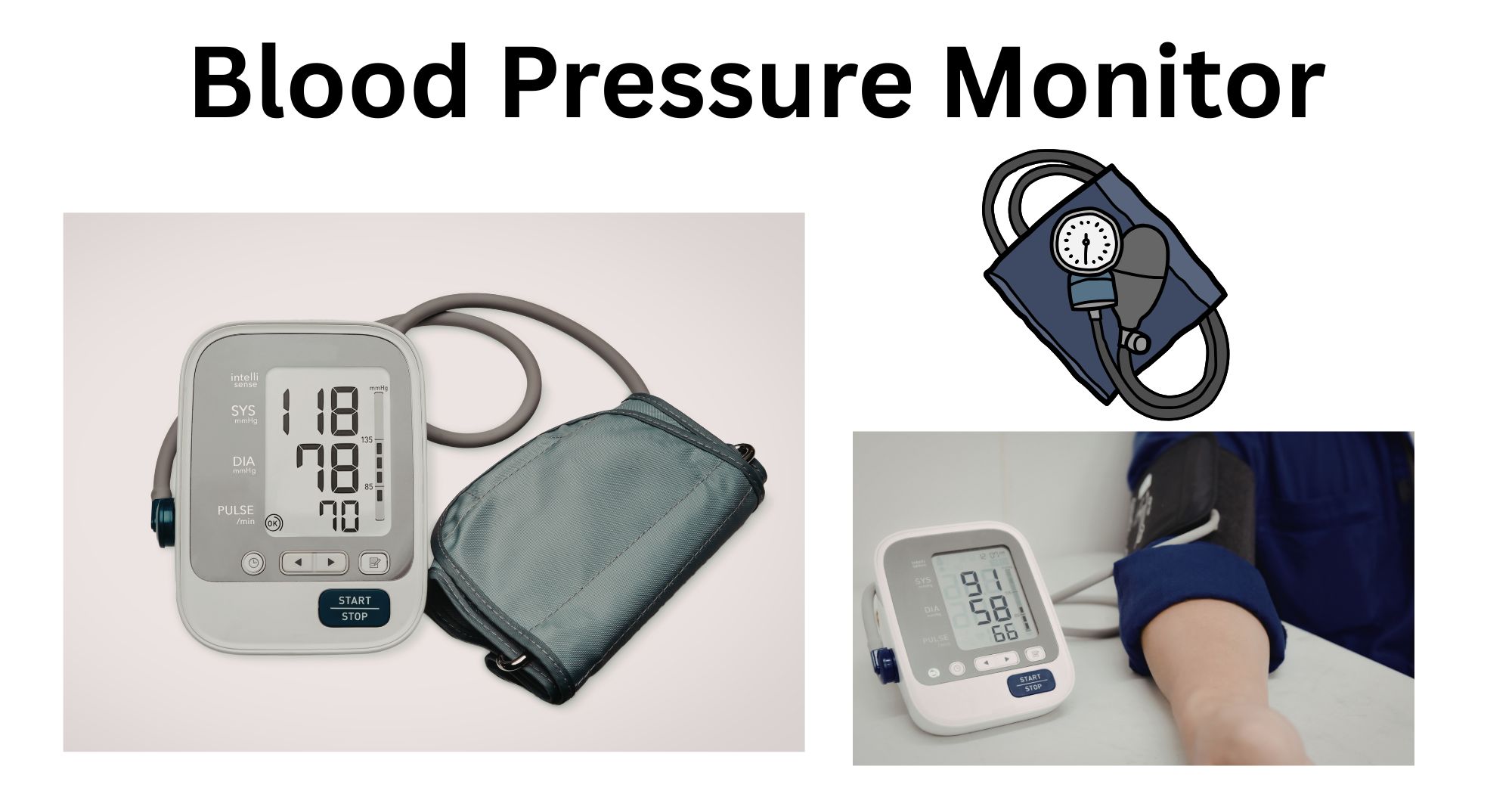
More precisely, a sphygmomanometer measures the force that circulating blood exerts against the walls of the arteries. Most clinical systems use an inflatable cuff on the arm, wrist, or finger to temporarily stop or reduce blood flow, then estimate pressure as blood starts flowing again.
Importance of Blood Pressure Monitoring in Healthcare
Blood pressure (BP) measurement is one of the most important tests in medicine and is central to diagnosing and managing hypertension. Hypertension (high blood pressure) is the leading risk factor for cardiovascular diseases, stroke, and kidney failure worldwide. Hypotension (low blood pressure) can lead to fainting, organ underperfusion, and shock. Regular monitoring allows clinicians to detect these conditions early, determine treatments, and track how well they respond to treatment. Therefore, a careful and standardized measurement is a must.
Types of Blood Pressure Monitors (Manual, Digital, and Ambulatory)
There are three types of blood pressure monitors used in different settings and for different purposes.
Manual sphygmomanometer
These are classical BP monitors consisting of an inflatable cuff, a rubber bulb, and a pressure gauge (mercury-based or aneroid). A clinician listens to Korotkoff sounds using a stethoscope to determine the blood pressure. It is typically used in clinics by experienced or trained clinicians to determine the sounds exactly. Mercury sphygmomanometers are called the traditional gold standard, but are not used now due to the mercury ban. Aneroid versions are safer alternatives.
Digital or Oscillometric blood pressure monitors
These are the most modern, most widely used pressure monitors, consisting of a cuff, pressure sensor, and display monitor. They are used in clinics, hospitals, and homes as they are convenient to use. These devices inflate the cuff automatically and use oscillometric technology to detect arterial wall vibrations. They display the reading on a screen, which makes them user-friendly and removes the need of stethoscope.
Ambulatory blood pressure monitors (ABPM)
These are wearable devices that consist of an automated cuff that takes readings over 24 hours. The device measures blood pressure at regular intervals, providing a more comprehensive picture of the overall blood pressure fluctuations than given by a single measurement. Nowadays, ambulatory and home monitors are strongly recommended to complement office readings.
Parts and Components of a Sphygmomanometer
A sphygmomanometer consists of:
Cuff and bladder: A cuff is an inflatable sleeve that wraps around the limb of the person. It is used for compressing the artery.
Manometer/ pressure sensor: In a manual sphygmomanometer, pressure is detected by a pressure gauge, either a mercury column or an aneroid gauge. In a digital device, an electronic transducer detects and displays BP on a digital screen.
Inflation system: A rubber hand bulb and an air release valve are present, which are used to pump air into the inflatable cuff and to gradually deflate the cuff, respectively, in the manual device. In digital devices, electric pumps and automatic valves are present.
Stethoscope: It is used for the detection of Korotkoff sounds.
In digital and ambulatory monitors, a data processing unit is also present to analyze pressure oscillations, store results, and sometimes transmit data.
Principle and Working of a Blood Pressure Monitor
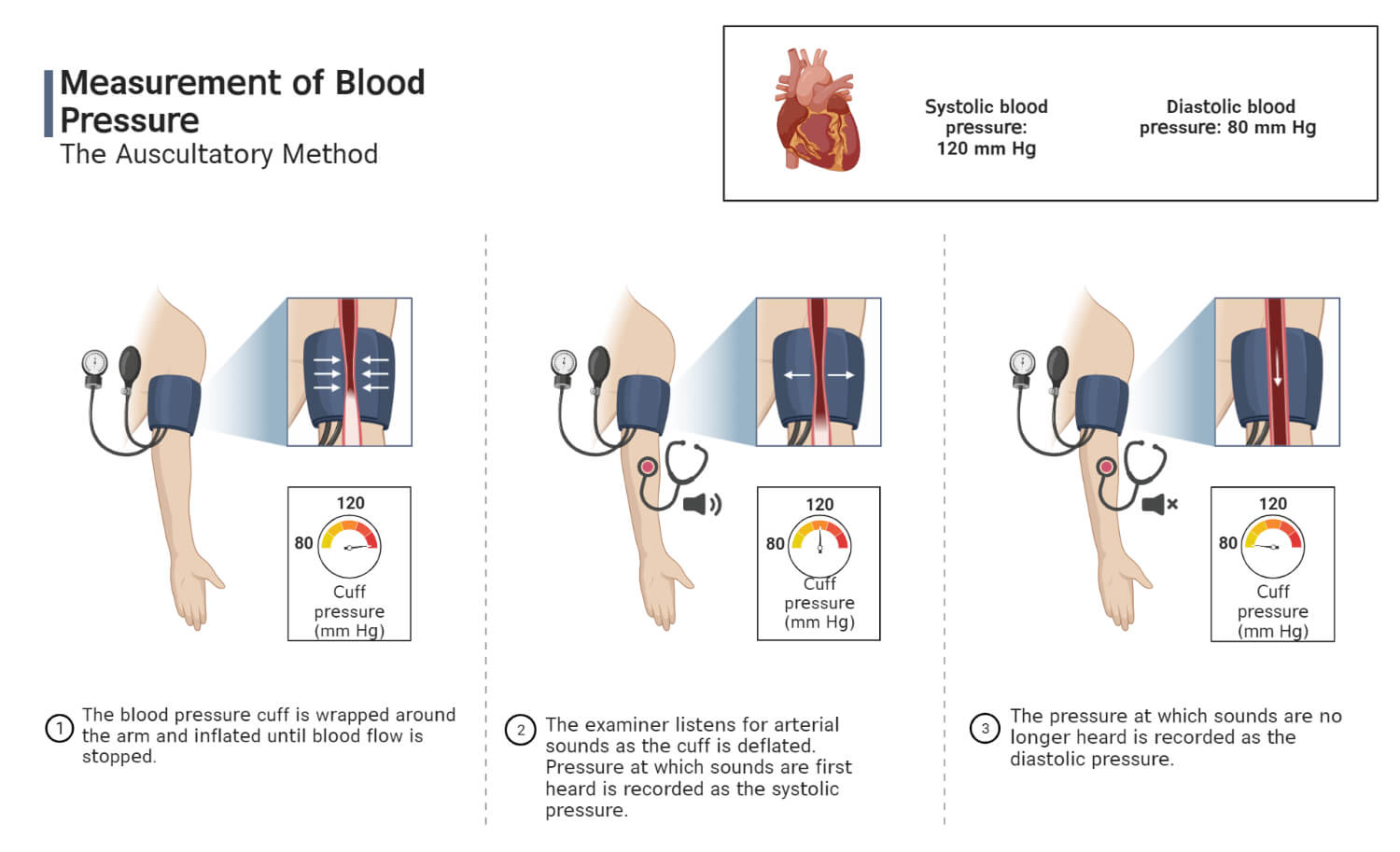
When the cuff is inflated above systolic pressure, the artery is fully occluded. As the cuff deflates, blood begins to flow through the artery again, producing sounds called Korotkoff sounds. The clinician listens for Korotkoff sounds to determine systolic and diastolic pressures. The pressure at which the first sound appears marks the systolic pressure, and when that sound disappears, it marks the diastolic pressure. This is an auscultatory method.
In the oscillometric method, sensors detect oscillations in cuff pressure and embedded algorithms estimate the mean, systolic, and diastolic BP.
How to Measure Blood Pressure Using a Sphygmomanometer
The standardized technique for the measurement of BP is as follows:
Preparation of patient: The patient should be allowed to rest (at least 5 min) quietly, avoid recent exercise, smoking, or caffeine, and ensure an empty bladder before measuring BP, as these may affect results.
Position of patient: The patient must be seated, back supported, and feet flat. He/she is told to extend an arm at heart level, and it should be supported. The cuff size should be correct, and it should be placed 2-3 cm above the elbow.
Inflate the cuff above the expected systolic BP.
Place the stethoscope over the brachial artery.
Deflate the cuff slowly and note the reading where the first Korotkoff sound appears (systolic) and the disappearance of that sound (diastolic).
For digital devices, apply the cuff correctly, keep the arm still, and start the device. It inflates, then deflates, and finally displays the reading automatically.
Interpretation of Blood Pressure Readings (Normal, High, and Low)
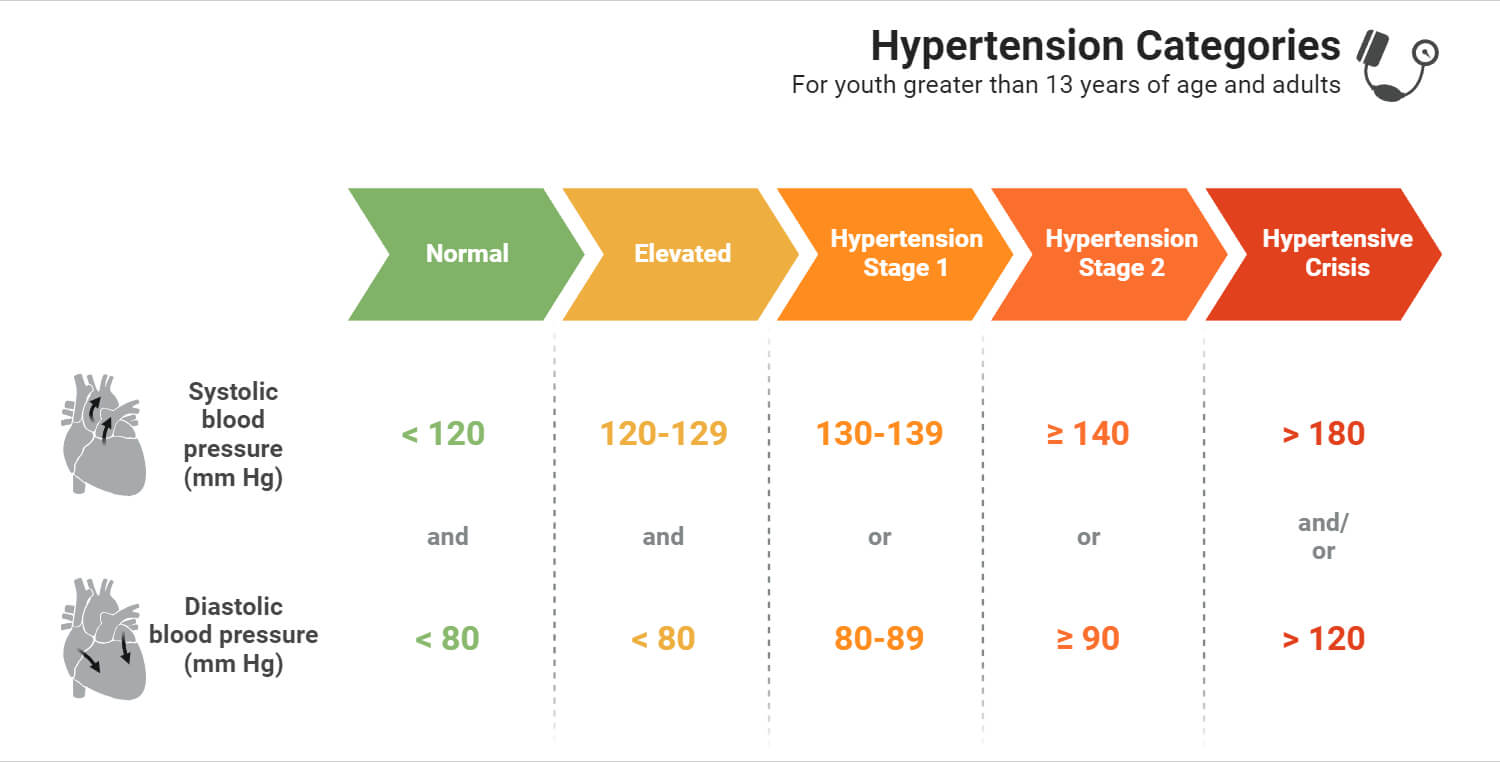
According to standard clinical guidelines, the normal BP for adults is 120/80 mm of Hg. Here, 120 mm Hg is the systolic BP and 80mm Hg is the diastolic BP.
The BP consistently greater than 130/80 mm Hg is defined as Hypertension, where stage 1 hypertension is 130-139/80-90 mm Hg and stage 2 hypertension is 149/90 mm Hg or above. A hypertensive crisis is when BP is 180/120 or higher, which requires immediate medical attention.
Hypotension is generally a reading below 90/60 mm of Hg, and it is characterized by dizziness, blurred vision, and fainting. Low BP can be problematic, especially in shock or acute illness.
Accuracy, Calibration, and Maintenance of Blood Pressure Monitors
A device must be calibrated, maintained, and validated periodically to ensure that it produces accurate results. Therefore, BP monitors must be validated as well. Aneroid gauges drift and require regular calibration (every 6-12 months). Ambulatory devices should be calibrated against a mercury standard within 5 mm Hg periodically. Accuracy is determined by cuff conditions as well. Devices should be stored properly. Incorrect cuff size, improper arm position, fast deflation, and patient movement may also cause errors in measurement, so a standardized protocol must be followed for accurate results. Therefore, in clinical settings, standardized protocols and regular equipment checks are a part of quality assurance and must be followed for BP devices as well.
Applications of Blood Pressure Monitors
- Clinical measurement: Measurement of BP in hospitals, clinics, and health posts for baseline diagnosis, treatment decisions, and follow-ups.
- Home BP monitoring: Convenient for people and cost-effective to monitor health by individuals at home, improving risk prediction and prevention.
- Ambulatory BP monitoring (ABPM) detects ups and downs 24 hours, giving an overall idea of BP, improving detection of masked hypertension, assessment of night-time BP, and prediction of cardiovascular risk in individuals.
- In surgery and anesthesia, continuous BP monitoring is a necessity.
- In emergency care, intensive care, and research.
Advantages of Blood Pressure Monitors
- Non-invasive, repeatable, and inexpensive
- Digital and home BP monitors are easy to use and allow multiple readings at home, enabling early detection of worsening conditions.
- ABPM and HBPM provide better and more dynamic information than single clinic readings can.
- Automated devices can reduce observer bias and human error while measuring manually.
Limitations of Blood Pressure Monitors
- Many devices on the market might not be properly validated, increasing the risk of misdiagnosis and inappropriate treatment.
- A single hospital measurement may be misleading due to the “white-coat effect” and “masked hypertension”.
- Oscillometric devices can be inaccurate in patients with arrhythmias, arterial stiffness, or very low perfusion.
- Also, carelessness in the measurement process, unfitting cuffs, and patient movement may introduce error.
Guidelines and Recommendations for Blood Pressure Measurement (WHO, AHA)
The World Health Organization (WHO) recommends that adults have their BP checked at least once every five years if readings are normal and more frequently if elevated or if risk factors are present. The American Heart Association (AHA) advises adults with hypertension to measure their blood pressure at home regularly using validated, upper-arm devices rather than wrist monitors. Major scientific bodies all converge on key recommendations, such as:
- Use validated, calibrated devices with the correct cuff size
- Follow the standardized technique for measurement
- Use HBPM and ABPM to confirm hypertension, detect white-coat and masked hypertension
Conclusion
Over time, the sphygmomanometer has evolved from a simple mercury column to a sophisticated digital and ambulatory system. However, its purpose is the same, i.e., to measure the pressure inside our arteries. When used correctly, blood pressure monitors are powerful tools for preventing heart attacks, strokes, and kidney diseases, turning this simple device into a life-saving instrument.
References
- Muntner, P., Shimbo, D., Carey, R. M., Charleston, J. B., Gaillard, T., Misra, S., Myers, M. G., Ogedegbe, G., Schwartz, J. E., Townsend, R. R., Urbina, E. M., Viera, A. J., White, W. B., Wright, J. T., & on behalf of the American Heart Association; Council on Hypertension; Council on Cardiovascular Disease in the Young; Council on Cardiovascular and Stroke Nursing; Council on Cardiovascular Radiology and Intervention; Council on Clinical Cardiology; and Council on Quality of Care and Outcomes Research. (2019). Measurement of Blood Pressure in Humans: A Scientific Statement From the American Heart Association. Hypertension, 73(5). https://doi.org/10.1161/HYP.0000000000000087
- Blood Pressure Calculator – Check Your BP Levels Instantly. https://calculator-study.com/blood-pressure-calculator
- The National Hypertension Taskforce aims to achieve 70% blood pressure control in Australia by 2030. – Stirling Central Health Clinic. https://stirlingclinic.com.au/2024/08/02/the-national-hypertension-taskforce-aims-to-achieve-70-blood-pressure-control-in-australia-by-2030/
- Blood Pressure Monitoring in Sussex Prices& Reviews | Wupdoc. https://www.wupdoc.com/find/blood-pressure-monitoring-t-23?city=sussex
- Chiominto, L., Chiominto, L., Gaspari, A., & Natale, E. (2025). Dynamic Multi-Axis Calibration of MEMS Accelerometers for Sensitivity and Linearity Assessment. Sensors, 25(7), 2120.
- How To Take Your Blood Pressure with Sleeves | Healthfully. https://healthfully.com/how-to-take-your-blood-pressure-with-sleeves-8115660.html
- 7 Factors That Can Affect Blood Pressure Readings. https://www.lifestreamgroup.com/health-tips-blog/heart-health-tips/7%20-factors-that-can-affect-blood-pressure-readings
- Nursing Assessment Study Guide: Techniques & Procedures. https://studylib.net/doc/25903529/physical-assessment-exam-study-guide
- Nearly 1.8 billion adults at risk of disease from not doing enough physical activity. Who.Int; World Health Organization: WHO. 2024. https://www.who.int/news/item/26-06-2024-nearly-1.8-billion-adults-at-risk-of-disease-from-not-doing-enough-physical-activity
- Bodner, C., & Slotten, A. M. (2023). Knowledge and skills of volunteer staff regarding hypertension at a free urban clinic. https://doi.org/10.25335/accn-nd80
