
Blood glucose monitors are medical devices that enable individuals to easily measure their blood sugar levels, particularly those with diabetes. They are very important in modern diabetes management because they guide treatment and help prevent dangerous fluctuations in blood sugar levels.
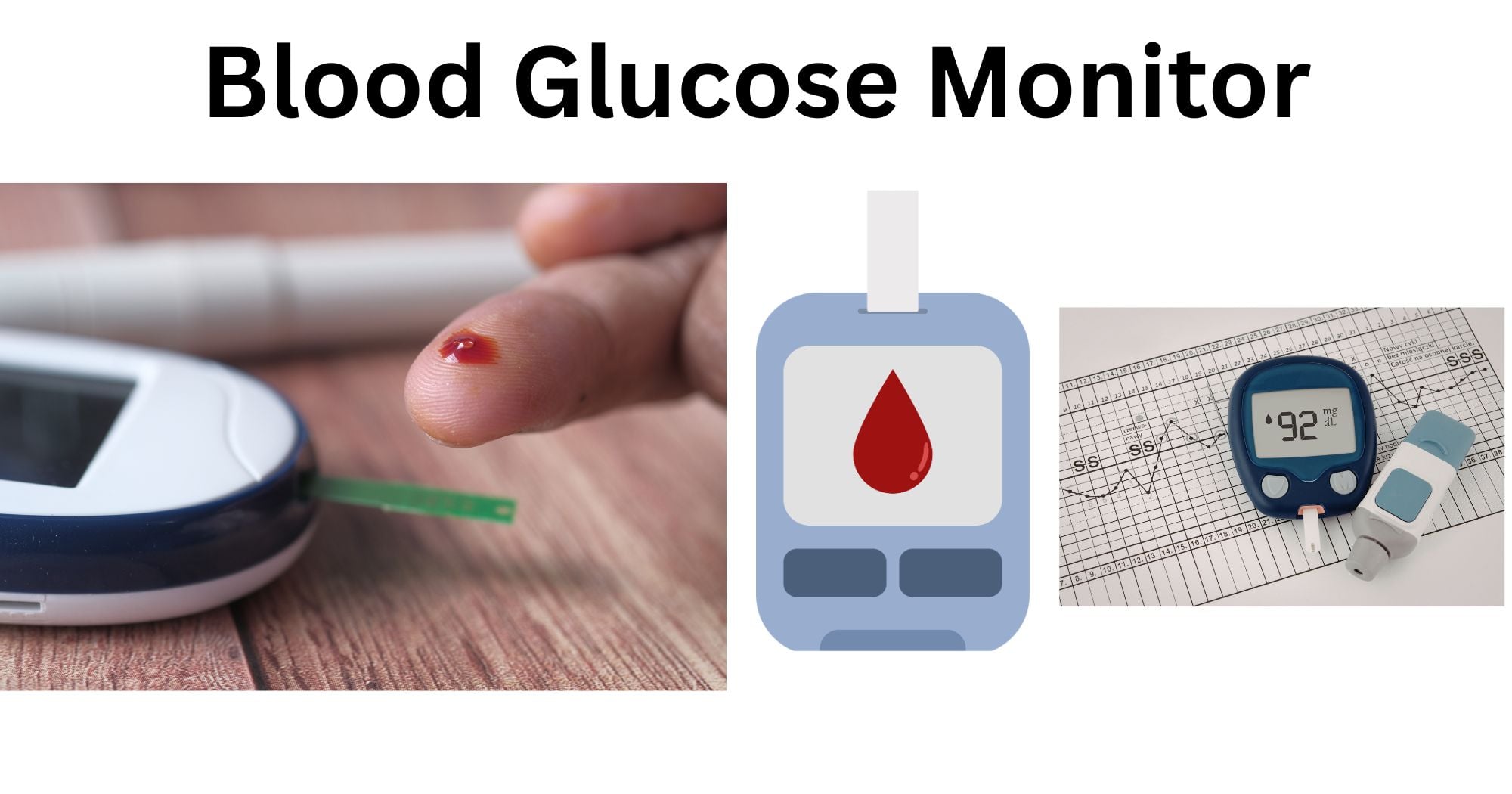
A blood glucose monitor, commonly called a glucometer, is a small portable device used to measure the blood sugar levels, using a drop of capillary blood from a fingertip (finger-prick method).
Nowadays, in addition to the traditional finger-prick method, wearable sensors have been developed that measure glucose in interstitial fluid almost continuously, known as continuous glucose monitoring (CGM) devices. However, both aim to show the current glucose level in the blood and guide therapy.
Importance of Blood Glucose Monitoring in Diabetes Management
Glucometers are crucial for diabetes management because glucose levels in patients fluctuate depending on meals, activity, stress, illness, and medication. Blood glucose monitoring is necessary in diabetes to guide doctors in adjusting insulin dosage, tablets, and diet. Regular monitoring helps detect hypoglycemia and hyperglycemia early, as it is important to prevent short-term and long-term effects such as organ damage.
Types of Glucometers
There are two major kinds of glucometers based on the approach of glucose monitoring: self-monitoring blood glucose and continuous glucose monitoring.
Self-monitoring of blood glucose (SMBG)- Finger-prick glucometers
These are classic home glucometers that use capillary blood. A tiny puncture is made in the fingertip using a lancing device, and the blood is placed on a test strip, which is read by the meter. SMBG gives a snapshot of sugar level at a specific time and is widely used worldwide due to its practicality, availability, and cost-effectiveness.
Continuous glucose monitoring (CGM)
CGM can be either real-time CGM (rtCGM) or intermittently scanned/ flash CGM (isCGM). CGM systems use a small sensor inserted under the skin to measure glucose in interstitial fluid. In rtCGM systems, a transmitter sends readings continuously to a receiver or smartphone, where values, trend arrows, and alarms for hypo- or hyperglycemia are displayed. However, in CGM systems, blood glucose readings are only shown when the user scans the sensor with a reader or phone (no continuous on-screen stream).
Parts and Components of a Glucometer
A standard capillary SMBG glucometer consists of a meter unit, test strips, a lancing device, and disposable lancets. The meter unit is made up of electronics, a processor, a display, and a memory unit. The test strip contains enzymes that react with glucose in the blood. The lancing device and lancet are necessary for pricking and drawing blood required for the test.
Modern devices (CGM) consist of a subcutaneous sensor, a transmitter, and a phone/receiver display.
Principle and Working of a Blood Glucose Monitor
Most glucometers work on the principle of electrochemical detection. When blood is applied to the test strip, the glucose reacts with an enzyme in the test strip (often glucose oxidase or glucose dehydrogenase). This generates an electric current proportional to the glucose concentration, which is measured by the meter and displayed as a numeric reading.
Continuous blood monitors work differently. In a CGM, an implanted sensor measures interstitial glucose continuously. Data are sent to a receiver, and trend arrows indicate the direction and speed of change. CGM readings may be different than finger-prick readings during rapid changes, as interstitial glucose can lag behind blood glucose.
How to Use a Glucometer for Blood Sugar Testing
Steps for measuring blood glucose using a self-monitoring blood glucose monitor are as follows:
- Wash and dry your hands to reduce contamination.
- Prepare the device: meter and test strip.
- Use a lancing device on the fingertip to obtain a small drop of blood.
- Apply the blood to the strip, and the meter will then analyze and display results in a few seconds.
- Record and interpret results.
- Dispose of the lancet and strip safely.
For CGM, the sensor is inserted, the calibration is confirmed if required, then it is worn for days, and observed and responded to trends and alarms.
Interpretation of Blood Glucose Readings
Clinicians interpret blood glucose levels after the result is obtained, mostly according to target ranges set by laboratories. The blood glucose is measured postprandially, i.e., 2 hours after eating, or fasting, i.e., 8 hours after eating, or it can be measured at random. The normal glucose level at fasting is around 70 to 99 mg/dl. Blood glucose level below 70 mg/dl is called hypoglycemia, and there is a risk of severe complications at lower levels. If the levels are between 100 – 125 mg/dl for fasting, it is regarded as pre-diabetes. The reading above or equal to 126 mg/dl or higher is called hyperglycemia or diabetes.
The reading should always be represented in context with the patient. E.g., a high value after eating is normal, while a low value after insulin use or exercise may need treatment. So, repeated abnormal readings are more important than an isolated number.
Accuracy, Calibration, and Maintenance of Glucometers
The accuracy of self-monitoring blood glucose devices depends on strip chemistry, meter design, and correct user technique. It also depends on proper storage, device quality, and environmental factors such as temperature. The readings might differ due to physiological and drug factors of an individual, such as oxygen, triglycerides, bilirubin, paracetamol, vitamin C, etc. Accuracy is judged against standards (ISO 15197) and measures such as MARD (Mean Absolute Relative Difference) and error grids.
Calibration is often checked using control solutions. Some manufacturers advise calibration with each new strip lot or after damage, getting wet, or battery replacement.
As with any device, routine maintenance is necessary for glucometer accuracy and durability. Routine maintenance includes checking battery status, keeping the meter clean, and replacing strips properly.
Applications of Glucometers
- Day-to-day self-monitoring and management of blood glucose levels.
- In-clinic and inpatient glucose monitoring.
- CGM better detects nocturnal and prolonged conditions and supports insulin adjustment.
Advantages of Glucometers
- SMBG is portable, relatively low-cost, and provides fast results.
- They provide immediate feedback useful for adjustments in food, activity, or medication in real time.
- CGM provides continuous profiles, trend arrows, alarms, and richer data for clinicians and patients.
Limitations of Glucometers
The limitations of glucometers are:
- SMBG only provides snapshot values, so it does not give the pattern of glucose levels.
- It misses nighttime changes and rapid fluctuations.
- Pain and inconvenience for the user as it requires repeated finger-pricks.
- CGMs are expensive and require training for use.
- The results are affected by user technique, strip quality, and environmental conditions.
Guidelines and Recommendations for Blood Glucose Monitoring (WHO, ADA)
Blood glucose monitoring recommendations come from professional groups such as the American Diabetes Association (ADA) and international laboratory groups. WHO is referenced especially for diagnosis and screening. ADA Standards of Care include recommendations on SMBG and CGM as part of glycemic goals and hypoglycemia prevention. Guidelines emphasize individualized monitoring frequency and combining SMBG, HbA1c, and CGM metrics to guide therapy. Recent ADA-endorsed guidance and international consensus recommend that rtCGM or CGM should be offered to adults and youth with diabetes on multiple daily injections (MDI) or insulin pumps, and to adults on basal insulin.
WHO is cited along with ADA for screening and diagnostic confirmation using fasting plasma glucose. An abnormal result should be retested to confirm diabetes.
Conclusion
A blood glucose monitor or glucometer is a practical and scientific tool for diabetes management. It helps measure glucose quickly, supports treatment decisions, and reduces the risk of complications when used correctly. Over time, glucometers have evolved from simple finger-prick devices to sophisticated wearable CGM systems. It reduces the need to rely on laboratory measurement of blood glucose and makes it convenient for anyone to determine glucose levels anytime.
References
- Bao, Y., Zhu, D., & Society, C. D. (2022). Clinical application guidelines for blood glucose monitoring in China (2022 edition). Diabetes/Metabolism Research and Reviews, 38(8), e3581. https://doi.org/10.1002/dmrr.3581
- Yu, J., Cho, J.-H., & Lee, S.-H. (2023). The era of continuous glucose monitoring and its expanded role in type 2 diabetes. Journal of Diabetes Investigation, 14(7), 841–843. https://doi.org/10.1111/jdi.14028
- Diabetes Treatment Doctor | Bryan Family Practice. https://bryanfamilypractice.com/diabetes-treatment-doctor/
- 13.15: Endocrine System Diseases – K12 LibreTexts. https://k12.libretexts.org/Bookshelves/Science_and_Technology/Biology/13%3A_Human_Biology/13.15%3A_Endocrine_System_Diseases
- Modern Insulin, Device, and Technology: Tips For Clinicians | Bangladesh Journal of Medicine. https://banglajol.info/index.php/BJMED/article/view/66135
- PTS CardioChek Plus analyzer | Medi-Shop.gr. https://www.medi-shop.gr/en/blood-analyzers/pts-cardiochek-plus-analyzer
- Wilson, R. (2023). Environmental management and conservation of Ireland’s small marl lakes and their crayfish populations. https://core.ac.uk/download/573311780.pdf
- Buhule, O. D. (2014). Bayesian hierarchical joint modeling of repeatedly measured mixed biomarkers of disease severity and time-to-event. https://core.ac.uk/download/33560675.pdf
- Continuous glucose monitors and virtual care in high-risk, racial and ethnic minority populations: Toward promoting health equity – Life Rise. https://liferise.co.uk/continuous-glucose-monitors-and-virtual-care-in-high-risk-racial-and-ethnic-minority-populations-toward-promoting-health-equity.html
- Glucose Monitoring Supplies for Accurate Blood Sugar Management | Healing Heart Disease Naturally (HHDN). https://www.healingheartdiseasenaturally.com/glucose-monitoring-supplies-for-accurate-blood-sugar-management/
- Otocin D Eye/Ear Drop | Chloramphenicol | USA Fast Delivery. https://365chemists.com/product/otocin-d-eye-ear-drops-chloramphenicol/
