
Water is a pivotal solvent in many industries, including pharmaceuticals, textiles, food, and Agri-tech. Water quality influences subsequent processes; hence, it is important to conduct water analysis. There are various parameters and reagents available to assess water quality from both microbiological and chemical/physical perspectives.
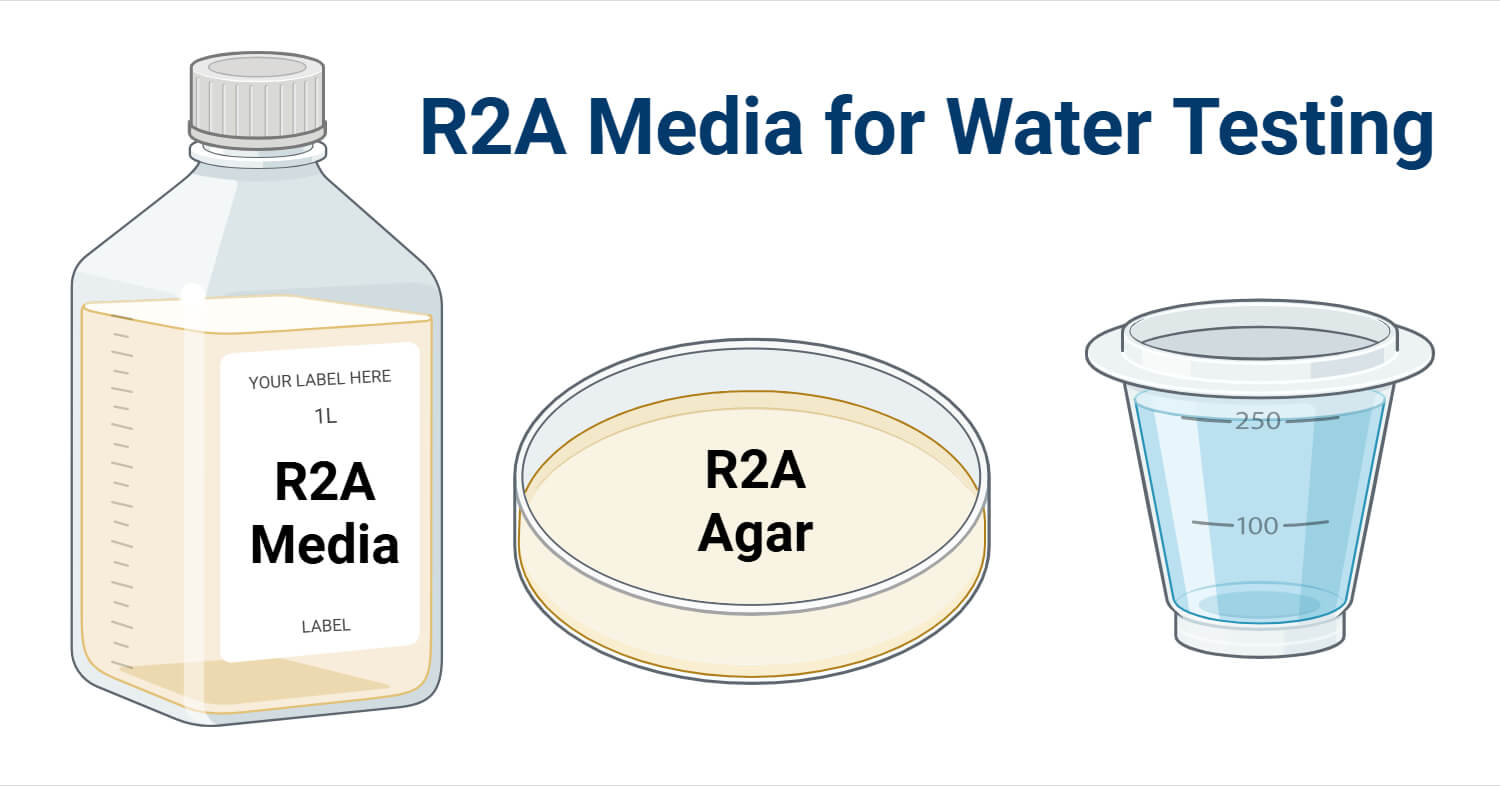
R2A media is an essential medium routinely used in industry for microbiological water analysis, particularly for potable water. Potable water is drinking water, or water fit to drink. In the pharmaceutical industry, potable water is mainly used for drug processing, API production, equipment cleaning, and as feedwater for further water treatment, etc.
Origin and Background of R2A Media
- R2A agar was developed by Reasoner and Geldreich in 1985 to enable bacterial plate counts of treated potable water.
- R2A Agar is recommended for the enumeration of heterotrophic, oligotrophic bacteria in water, especially potable water, for distortion-free viewing.
- Since plate count agar does not support the growth of many bacteria present in treated potable water supplies, R2A media was designed.
- Heterotrophic bacteria are ubiquitous and cannot produce their own food; hence, they feed on other organisms or dead organic matter, consuming their organic compounds. Meanwhile, oligotrophic bacteria grow in environments that are low in nutrient concentration.
- Being a low-nutrient medium, R2A supports the growth of slow-growing, chlorine-tolerant bacteria designed to enumerate and recover organisms that may be under stress or naturally adapted to nutrient-deficient aquatic environments.
- R2A requires longer incubation and a lower temperature for bacteria to grow properly
- In water analysis, R2A is recommended for pour plates, spread plates, and membrane filter methods.
Principle and Mechanism of R2A Media
- Yeast extract offers microbes a nutrient-rich source. Predominant in B-complex vitamins, which are crucial for growth. Moreover, it provides an easily accessible blend of amino acids, peptides, and nucleotides to promote strong and quick growth.
- Proteose Peptone is a heterogeneous mixture of high-molecular-weight peptides, proteoses, and amino acids derived from the controlled enzymatic hydrolysis of animal protein. It serves as a superior source of organic nitrogen and carbon, essential for the cultivation of fastidious microorganisms.
- Casamino acids serve as a defined nitrogen source, providing a complete profile of free amino acids (except tryptophan). They are derived from the complete acid hydrolysis of casein, a process that cleaves all peptide bonds, releasing the individual amino acids. This makes them a superior nutrient for cultivating fastidious microorganisms in chemically defined media.
- Glucose is added as the primary carbon and energy source for microbial growth. As a readily metabolized monosaccharide, it is a key substrate for glycolysis and subsequent metabolic pathways, providing both the energy (ATP) and carbon skeletons necessary for cellular biosynthesis and replication.
- Microorganisms that produce the enzyme amylase can break down the starch molecules into simple sugars (glucose), which they can then metabolize for energy. This makes R2A a versatile medium that supports a broader range of microorganisms, including those that can utilize complex carbohydrates. Starch also acts as a neutralizing agent by neutralizing the toxic metabolic byproducts that some bacteria may produce. This is vital for the survival and growth of stressed or damaged microbes, a key objective in water sample analysis.
- Sodium pyruvate plays a crucial role in neutralizing harmful reactive oxygen species (ROS), such as hydrogen peroxide (H2O2), which may develop in the culture medium. These by-products have the potential to induce oxidative damage to microbial cells, particularly those that are already under stress from environmental influences like disinfectants (for instance, chlorine) or a lack of nutrients.
- During growth, microorganisms metabolize nutrients and produce waste products, which can be either acidic (like lactic acid) or alkaline (like ammonia). These metabolic by-products can cause significant shifts in the medium’s pH, which can inhibit or even kill the microbes. K2HPO4 acts as a buffering agent, which keeps the pH of the medium optimum for the survival of microorganisms.
- Magnesium acts as a crucial cofactor for numerous enzymes involved in energy metabolism and nucleic acid synthesis. Sulfate is a required nutrient for the synthesis of sulfur-containing amino acids.
Ingredients of R2A Media
- Yeast extract 0.5g/lit
- Proteose Peptone no. 3 0.5g/lit
- Casamino Acids 0.5g/lit
- Glucose 0.5g/lit
- Soluble starch 0.5g/lit
- Sodium pyruvate 0.3g/lit
- K2HPO4 0.3g/lit
- MgSO4 * 7H20 0.05g/lit
- Agar 5.0g/lit
- pH 7.2 +- 0.2
Storage Conditions of R2A Media
Many heterotrophic bacteria in treated water sources are adapted to low-nutrient, low-temperature environments. Incubating R2A plates at a moderate temperature of 20-25°C prevents thermal stress and denaturation of heat-sensitive enzymes, which would occur at the mesophilic range (35-37 °C) used for other media. This condition facilitates the recovery and growth of these slow-growing, metabolically stressed organisms, leading to a more accurate enumeration of the total viable bacterial population. After autoclaving and solidifying, the media appears slightly pale white, clear, but a little opalescent.
Results and Observations in R2A Media
- Observations are ideally made after an incubation period of 5 to 7 days at 25°C.
- The table below shows how different microbes appear on R2A media.
| Microorganism | Appearance |
| E. coli | Circular, smooth, off-white or white, translucent, small |
| Enterococcus faecalis | Pinpoint, circular, smooth, greyish-white, opaque. |
| P. aeruginosa | Irregular, translucent, greenish, flat |
| Bacillus | Off-white, irregular, opaque, rhizoid-like, flat, spreads rapidly. |
Limitations of R2A Media
- When quick results are anticipated, a longer incubation period of R2A media can be one of the limitations
- Fast-growing bacteria may be outgrown by low-nutrient-requiring bacteria since it is a low-nutrient medium
- R2A media is not recommended for the pour plate method due to the high temperature of melted media after autoclaving
- The media was specifically designed to recover stressed microbes from potable water, i.e., from a low-nutrient environment
Applications of R2A Media
- Widely used media in the pharma industry for water analysis, especially potable water
- Detects chlorine-tolerant, stressed microorganisms that may be difficult to grow
- Enumerates oligotrophic and heterotrophic bacteria
- Can be used to culture bacteria from biofilms
- Ideal for membrane filter method analysis of water
- Recommended for isolation and recovery of aerobic, heterotrophic bacteria
References
- General Chapters: <1231> WATER FOR PHARMACEUTICAL PURPOSES. (n.d.). http://www.uspbpep.com/usp29/v29240/usp29nf24s0_c1231.html
- Reasoner, D. J., & Geldreich, E. E. (1985). A new medium for the enumeration and subculture of bacteria from potable water. Applied and Environmental Microbiology, 49(1), 1–7. https://doi.org/10.1128/aem.49.1.1-7.1985
- https://cdn.media.interlabdist.com.br/uploads/2021/01/R2A-Agar.pdf
- Reasoner, D. J., Geldreich, E. E., European Pharmacopoeia, Fiksdal, L., Vik, E. A., Mills, A., Staley, T., Kelly, A. J., Justice, C. A., Nagy, L. A., Means, E. G., Hanami, L., Ridgway, H. F., Olson, B. H., Greenberg, A. E., Clesceri, L. S., Eaton, A. D., VanSoestberger, A. A., Lee, C. H., . . . Wu, S. (2021). Technical Specification sheet [Technical Report]. https://www.neogen.com/4a24ad/globalassets/pim/assets/original/10032/official_ncm0076_r2a-agar_technical-specifications_en-us.pdf
